

In 1966, the story of Tzu Chi began in Hualien, an impoverished rural county in Taiwan. Dharma Master Cheng Yen, a devout Buddhist nun, was deeply moved by the misery and pain present in the community. Master Cheng Yen made a powerful aspiration to relieve suffering and help the poor.
This resolve was ignited by a singular, heartbreaking moment that would fundamentally alter Master Cheng Yen's path. While visiting a local hospital, Master Cheng Yen encountered a harrowing sight: a pool of blood left on the floor. Master Cheng Yen was devastated to learn that the blood belonged to an aboriginal woman who was pregnant and had suffered through a difficult labor.
The woman was forced to leave the hospital untreated simply because the family could not afford the required financial security deposit. Witnessing this visceral evidence of how poverty barred access to life-saving medical care spurred Master Cheng Yen to resolve that no one should be left to suffer due to a lack of funds.
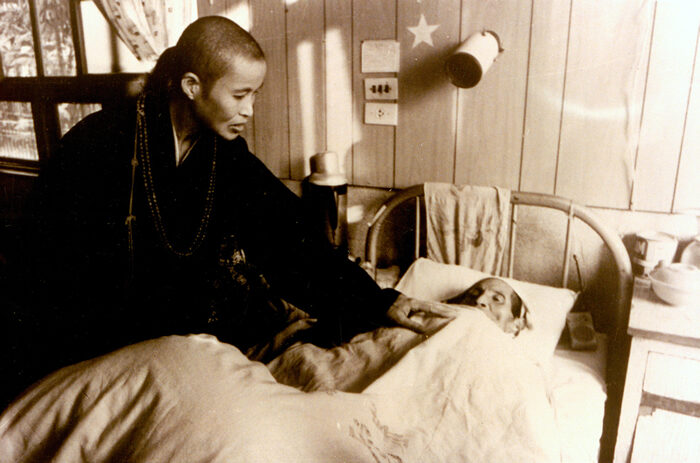
In that same pivotal year, a thought-provoking dialogue occurred when three Catholic nuns from Hualien Haixing High School visited Master Cheng Yen to discuss religious doctrine. While the nuns acknowledged the depth of Buddhist philosophy and its compassion for all living beings, the Catholic nuns posed a challenging question.
The nuns pointed out that while the Catholic Church demonstrated benevolence by building hospitals, schools, and nursing homes for society, what concrete contributions had Buddhism made?

This inquiry weighed heavily on Master Cheng Yen. Master Cheng Yen realized that while Buddhists frequently performed good deeds, those efforts were often anonymous, individual, and scattered rather than a collective force. This realization was a primary catalyst for the founding of Tzu Chi, inspiring Master Cheng Yen to organize isolated acts of kindness into a structured charity mission capable of actively helping the poor and sick.
Driven by this resolve to translate faith into tangible action, Master Cheng Yen established the Buddhist Compassion Relief Tzu Chi Foundation. With no major funding to rely on, Master Cheng Yen joined forces with just five female disciples and thirty ordinary housewives.
To fund the charity, the disciples made baby shoes for sale and put money aside from what little they had for food. Furthermore, Master Cheng Yen fashioned coin banks out of bamboo and asked the thirty housewives to save a mere fifty Taiwanese cents every day before going to the market.
When asked if followers could simply donate fifteen dollars at the end of the month instead, Master Cheng Yen explained that while the monetary amount would be exactly the same, saving a coin daily required giving rise to a compassionate thought every single day.
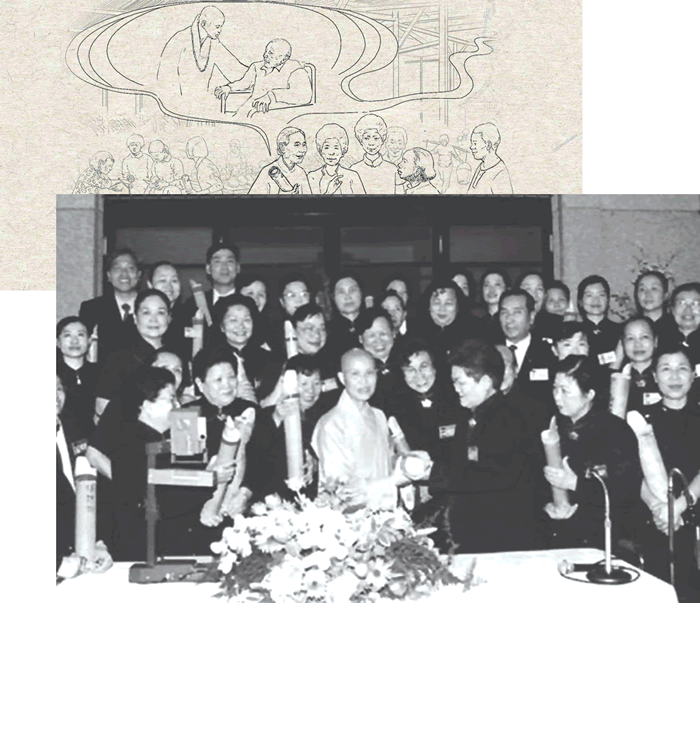
This "Bamboo Bank Era" established the foundation's core philosophy: one does not need to be wealthy to help others, as consistent, small acts of kindness carry immense power.
From the humble sound of coins dropping into bamboo tubes, Tzu Chi has grown from a local effort into a global humanitarian charity organization. The foundation's work remains entirely rooted in Master Cheng Yen’s philosophy of unconditional "Great Love" (Da Ai)—a love that transcends all boundaries of race, religion, and nationality.
Tzu Chi stands today as a commitment to an active, practical love for all humanity, proving that when deep empathy is combined with collective, organized action, everyday people can come together to heal the world.